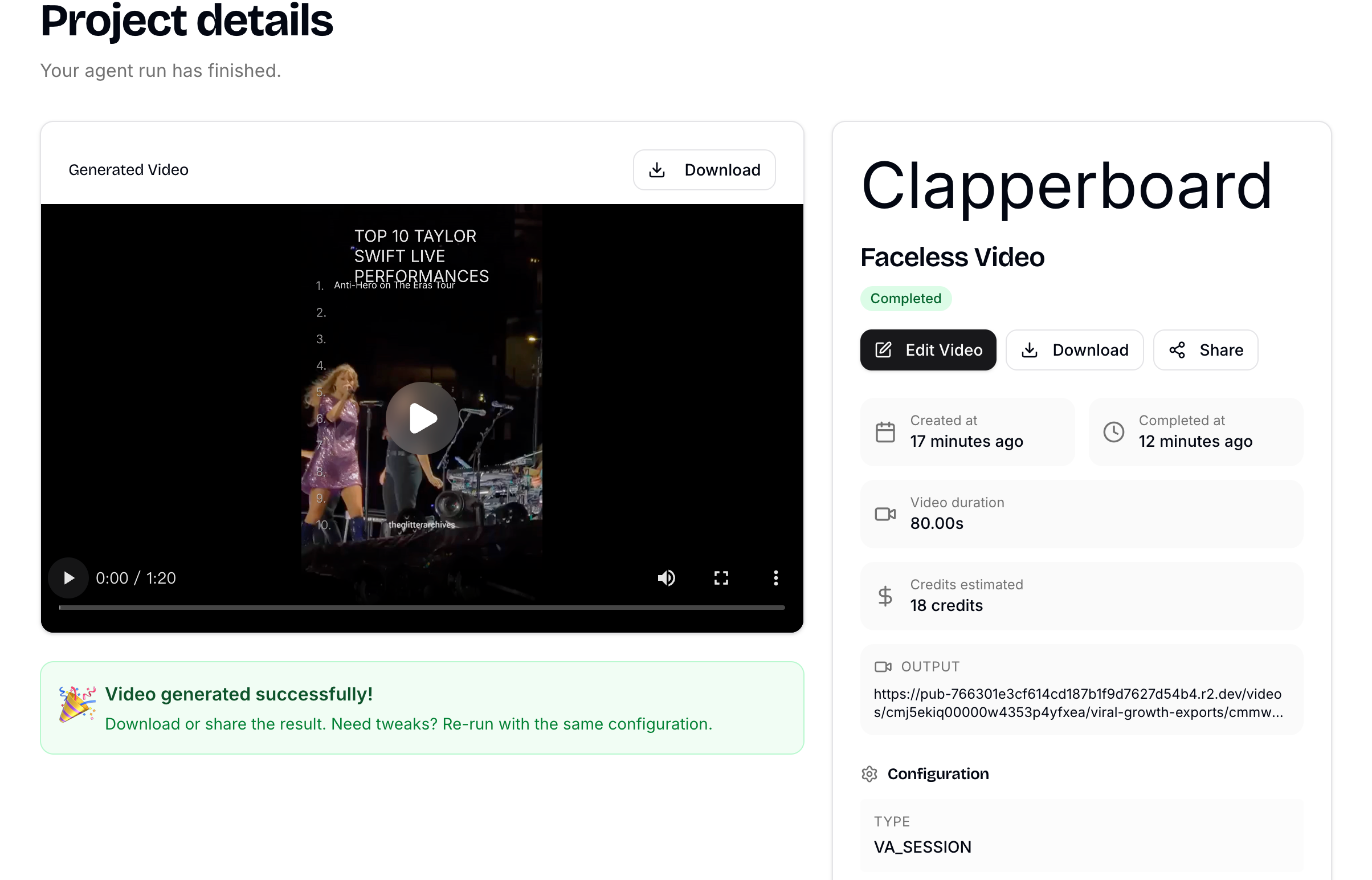
How to Create Viral Top 10 Music Ranking Videos for TikTok, Instagram Reels, and YouTube Shorts
If you have made music short-form videos before, you already know the real bottleneck is usually not the editing software. It is the mess that happens earlier. The topic is too broad, the ranking scope keeps drifting, the clip pool grows out of control, and by the time you reach the timeline, you are staring at a pile of footage instead of a publishable video.
That is exactly why Top 10 music ranking videos still work. They are not just an old content trick. They are a naturally strong format for short-form distribution. Rankings create curiosity. Music creates recognition. Familiar stage moments, artist visuals, and performance peaks give viewers a reason to stop scrolling and keep watching.
But here is the part people usually miss: Top 10 does not go viral by itself. What makes the format scalable is the production system behind it.
This article breaks down a real workflow for producing this kind of content. In plain terms, it is a four-step system: define the ranking, collect the clips, lock the pacing, and package the final edit. It works especially well for faceless content built around music highlights, live performances, artist eras, iconic stage moments, award-show appearances, and performance-based fan content. It also maps cleanly to TikTok, Instagram Reels, and YouTube Shorts.
More importantly, this is not fake process talk. In the actual workflow, the production stages are clearly separated into Ranking Data, Media Collection, Ranking Compositing, and Final Edit. The shot board is already fixed to 10 shots, 1080x1920, 30fps, 8s/shot, and a total duration of 80 seconds. That is where the credibility comes from. This is not an imagined framework. It is a method reverse-engineered from a system that can already produce a finished vertical video.
Why Top 10 Music Ranking Videos Still Work Across All Three Platforms
Short-form platforms do not reward completeness. They reward clarity and immediate pull. That is why the Top 10 format has structural advantages:
- It creates built-in suspense. People want to know what makes the top spot.
- It creates built-in progression. Every rank is a natural segment.
- It creates built-in debate. Rankings always trigger disagreement and comments.
- It fits the
9:16feed format without requiring heavy narrative setup.
Music content has an extra edge because both the audio and the visual layer can hook attention. A viewer does not need to watch a full clip to recognize a singer, a costume, a tour moment, or a chorus. Recognition happens fast, and fast recognition is what keeps people from swiping away.
So the real question is not whether Top 10 music compilations still work. The real question is whether you can turn them into a stable production system instead of a one-off editing exercise.
Viral Results Are Not Magic. Start With the Right Data Structure
The bad way to build these videos is to start in the timeline. Someone has an idea, opens a video editor, drags in a bunch of clips, and then tries to discover the ranking logic while editing. Halfway through, the structure falls apart. The footage lengths do not match. The title no longer fits the material. The captions feel inconsistent. The editor becomes a repair tool for all the thinking that never happened upstream.
The better approach is much simpler. The core unit is not "a video." It is this chain:
Rank -> Search Pack -> Best Clip -> Shot Slot -> Final Edit
That chain matters because it forces each decision into the right stage:
Rank: What exactly are you ranking?Search Pack: What search terms and reference phrases will find the right footage?Best Clip: Which single clip best represents that rank?Shot Slot: Where does that clip sit in the final sequence, and how long should it stay on screen?
Once that structure is stable, a lot of creative chaos disappears. You stop building from instinct and start building from a controlled system.
Step 1: Define the Ranking Before You Touch Footage
The first step is not opening a media library. The first step is locking the ranking title and the scope.
For example, instead of making something vague like:
- Top 10 Taylor Swift moments
you narrow it into something production-ready like:
- Top 10 Taylor Swift live performances
- Top 10 Taylor Swift Grammy moments
- Top 10 Taylor Swift Eras Tour stage highlights
That looks like a small difference, but it changes everything downstream. If the ranking scope is vague, clip collection will collapse into noise. You will end up mixing music videos, tour footage, interviews, fan edits, behind-the-scenes clips, and random reposts. At that point, everything is technically usable and nothing is editorially strong.
A more reliable method is to assign a search pack and a media hint to each rank before collection starts. If one rank is supposed to represent a specific Grammy performance, the search should be built around that event, that scene, and that context, not just the song title.
That is the whole point of the ranking stage. The ranking should guide collection. If it does not, the ranking is too weak.
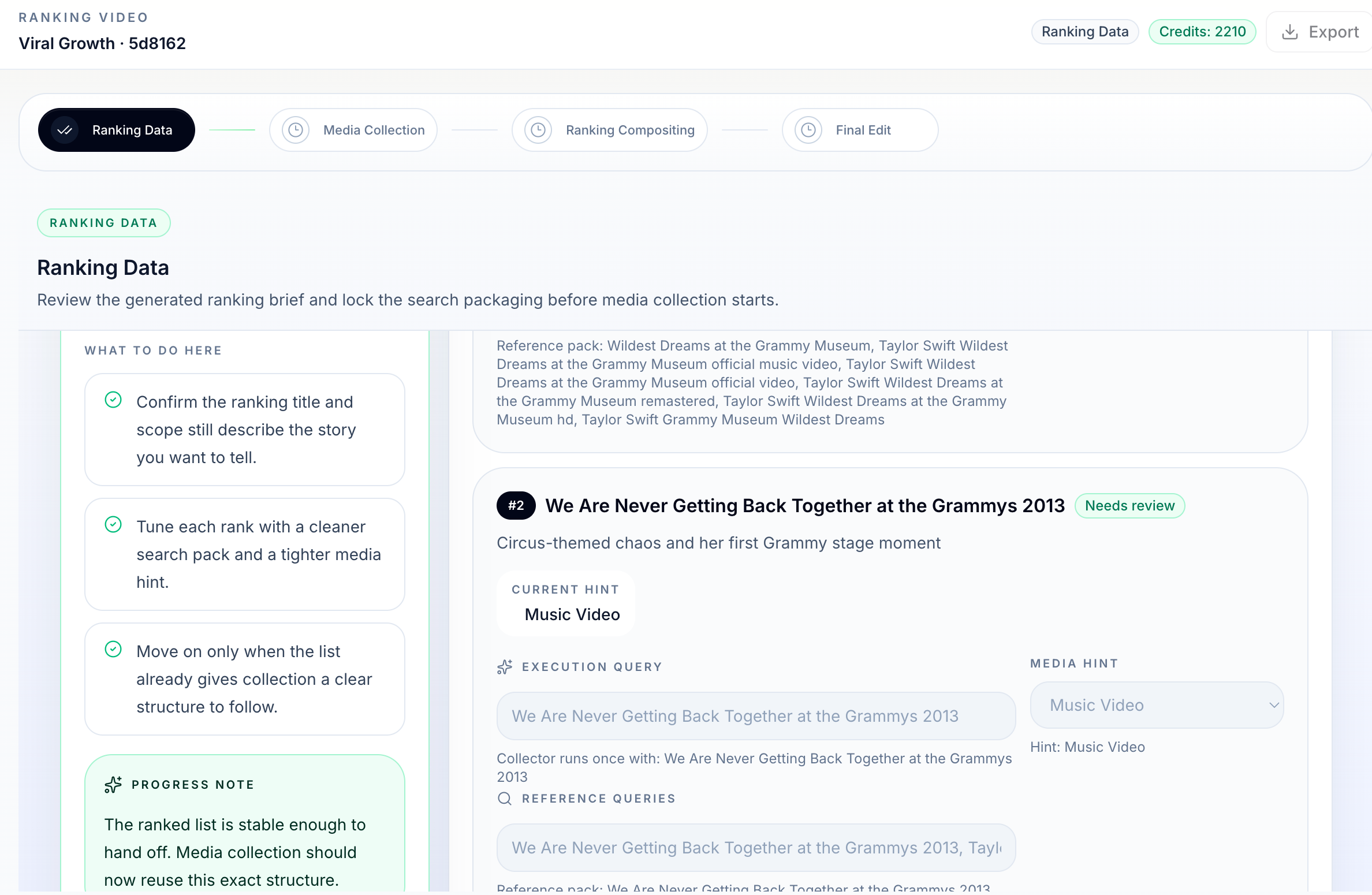
This is the point where the ranking becomes usable: title, scope, search pack, and media hints are defined before collection starts.
Step 2: Keep Only One Strong Candidate Per Rank
This is where many teams start producing garbage. They collect too many clips for every rank and tell themselves they are "keeping options open." In practice, they are just building a messy archive that slows down every later decision.
The useful rule is much stricter: each rank should keep only one current best candidate.
If a clip is already clear enough, strong enough, and representative enough, lock it. Do not keep ten almost-identical options around just because you are afraid to decide.
When selecting the best clip, use hard standards:
- It should read instantly. The viewer should not need three seconds to understand what is happening.
- It should carry emotional energy. The movement, stage moment, crowd reaction, or visual payoff should be obvious.
- It should survive vertical framing. The main subject must still work after cropping and text overlay.
This stage is not about collecting the most complete source material. It is about selecting the most publishable material. You are making short-form content, not building a media archive.
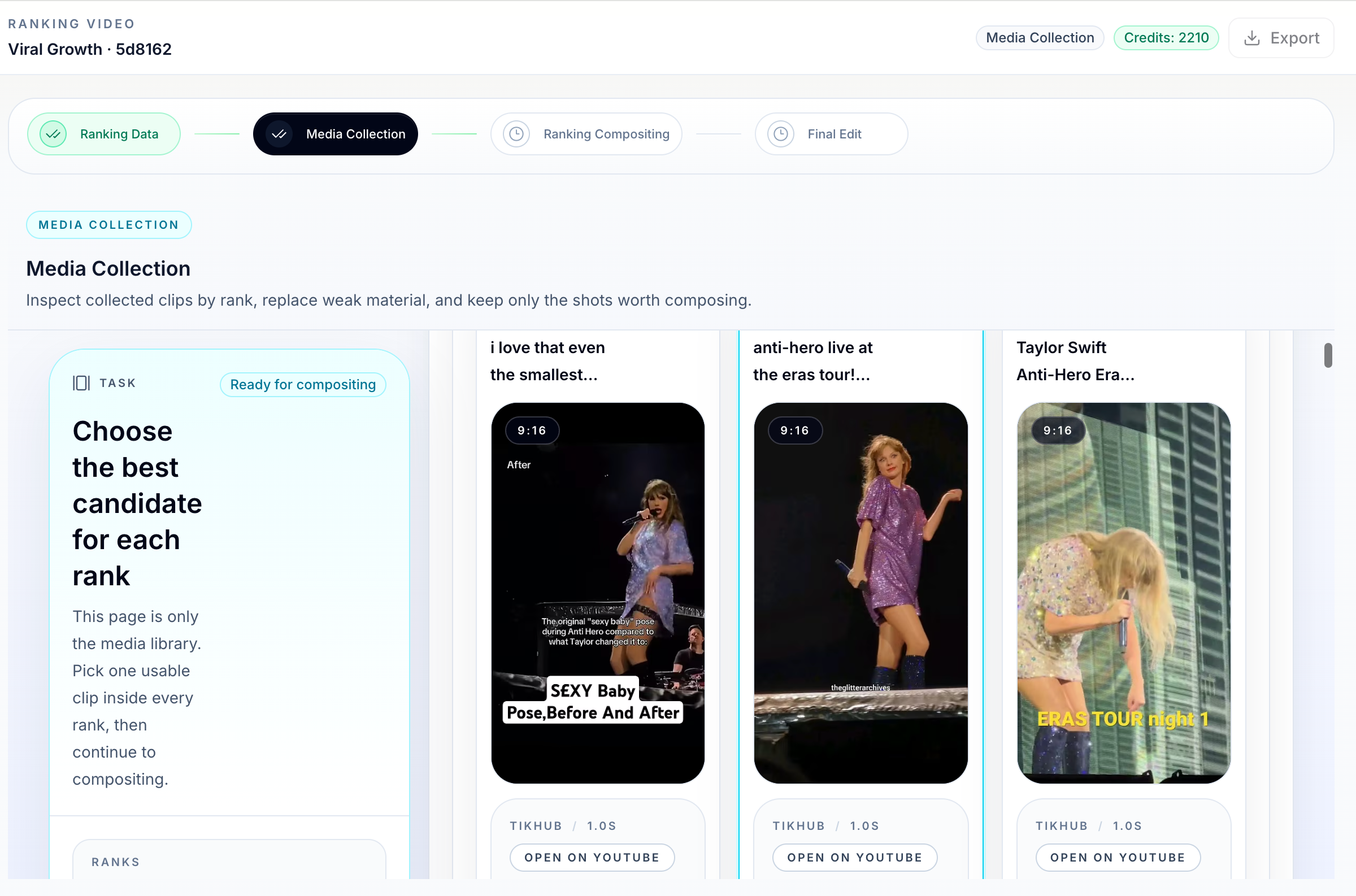
The collection stage should stay narrow. Each rank gets one usable winner, not a pile of maybe-later footage.
Step 3: Use Fixed Pacing to Eliminate Complexity
What makes this format scalable is not more transitions. It is fewer special cases.
A very practical structure looks like this:
10shots1080 x 192030fps8 secondsper shot80 secondstotal- A linear rank progression such as
10 -> 1or1 -> 10 Cut transitionsas the default
This works for a reason:
- Every clip has a defined job.
- Nobody can quietly stuff an extra 15 seconds of weak footage into the middle.
- The pacing stays consistent across videos.
- Review, iteration, and team handoff become much easier.
People often try to get clever here. They add flashy transitions, irregular timing, layered motion graphics, or extra visual tricks. Most of the time, that complexity is just covering up a weak structure. In ranking-based music videos, the content is already doing the heavy lifting. Clean cuts, readable text, and stable forward motion matter more than unnecessary editing noise.
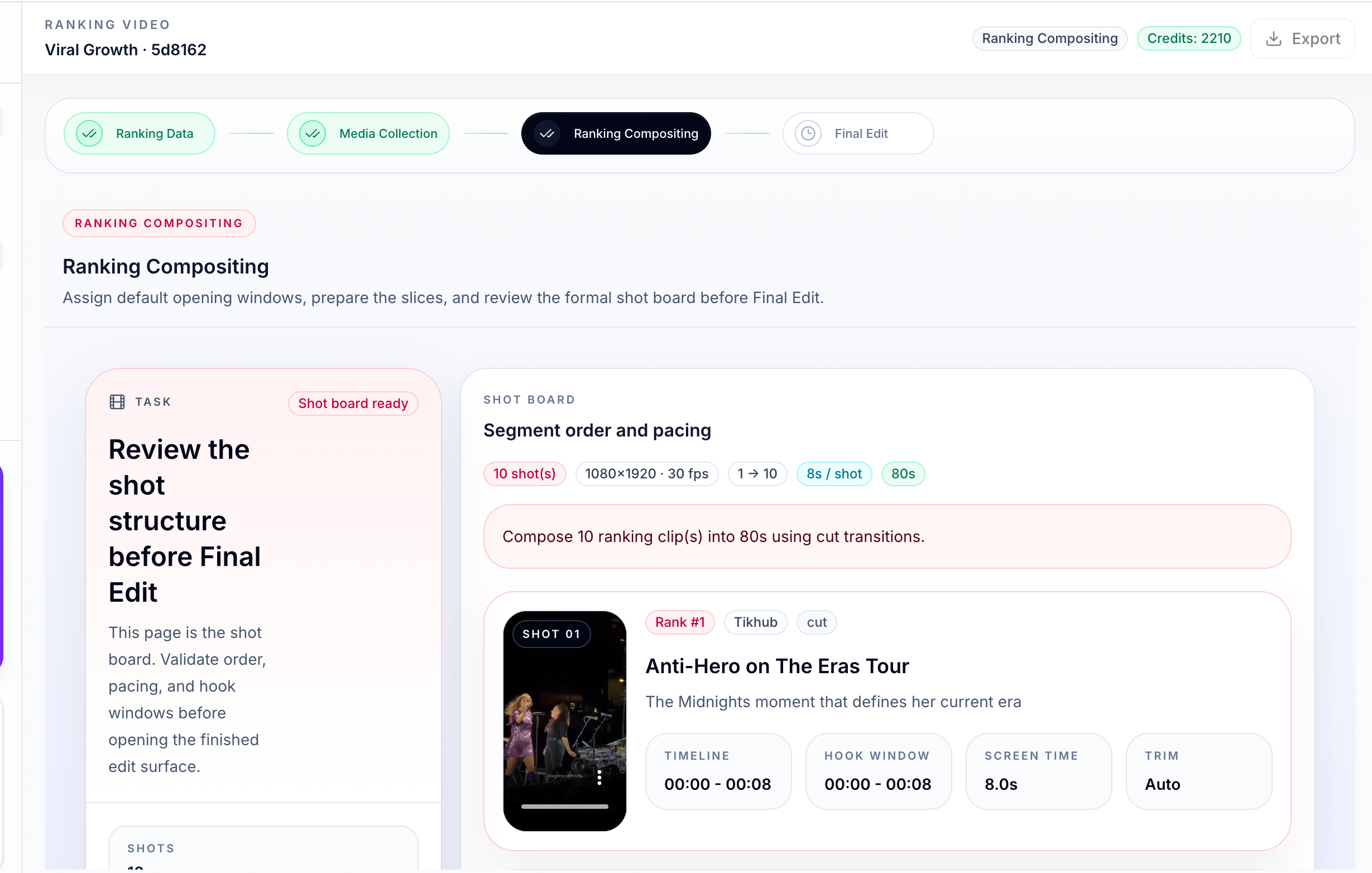
The shot board is where the structure becomes concrete: 10 ranked clips, 8 seconds per shot, 80 seconds total, with a fixed vertical format.
Step 4: Save Packaging for the Final Edit
Once the first three stages are stable, the final edit should not be responsible for rewriting the video. It should do only three things:
- Apply a consistent title overlay such as
TOP 10 TAYLOR SWIFT LIVE PERFORMANCES - Standardize rank labels, typography, and text placement
- Fine-tune position, scale, and opacity so the subject remains clear in a vertical frame
That is the right job for final edit. It is an output stage, not a rescue stage.
If you are still changing the ranking, swapping the main clips, or rebuilding the pacing in final edit, then the earlier stages failed.
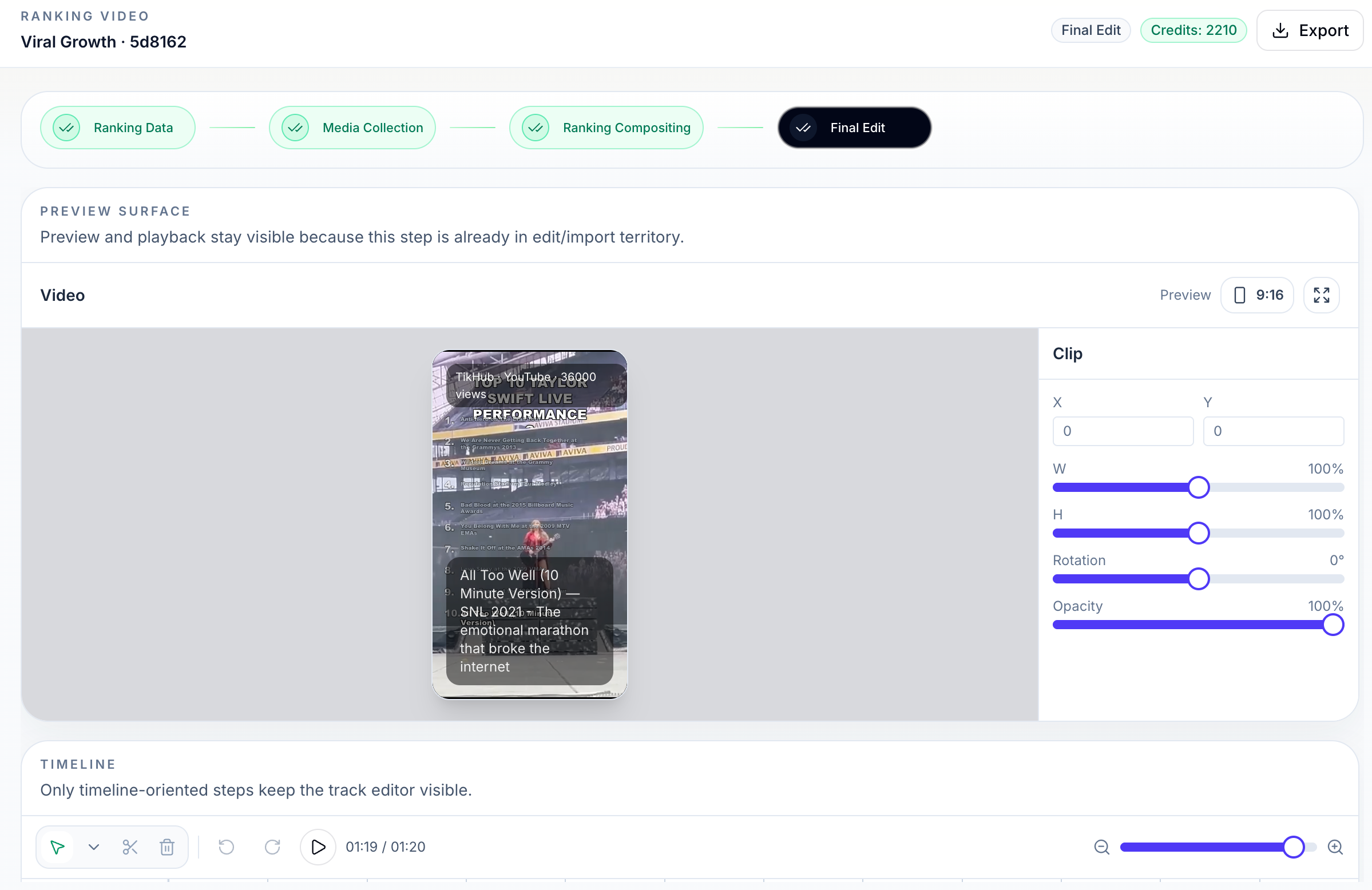
Final edit should be light-touch packaging: align the overlay, adjust framing, and export. If you are rebuilding the story here, the workflow is already broken.
How to Adapt One Video for TikTok, Instagram Reels, and YouTube Shorts
All three platforms can support Top 10 music ranking videos, but they do not reward the exact same first impression.
TikTok
TikTok responds better to aggressive clarity. The first one or two seconds should state the premise immediately. Do not waste time warming up the viewer.
A stronger opening line looks like this:
Top 10 Taylor Swift live moments that broke the internet
The opening visual should also hit hard. Start with a highly recognizable shot instead of slowly building toward it.
Instagram Reels
Instagram Reels tends to reward cleaner presentation. Keep captions lighter, framing cleaner, and the first frame more polished. A version that survives on raw intensity on TikTok may still feel messy on Reels.
YouTube Shorts
YouTube Shorts works well with stronger information hierarchy. Make the ranking number, artist name, event label, and theme easy to parse even when the video is muted. The format also benefits from the built-in rewatch and comment behavior that ranking content naturally creates.
The smart approach is not to make three totally different videos. Build one strong master version, then adjust the hook line, thumbnail frame, title language, and text density for each platform.
The 5 Fastest Ways to Kill Retention
1. The topic is too broad
Top 10 Taylor Swift moments sounds flexible, but that flexibility is exactly the problem. Broad topics create weak rankings.
2. The lower ranks are filler
If ranks 6 through 10 feel like leftovers, viewers will drop early. A ranking video is only as strong as its weakest segment.
3. The hook does not land immediately
Viewers do not give you eight seconds of patience. The first screen has to tell them who the artist is, what the ranking is about, and why they should care.
4. Clip length is decided by feeling
If one clip runs 3 seconds and another runs 17 seconds for no structural reason, pacing will break. Start with a fixed shot slot. Fine-tune later.
5. Copyright is treated as an afterthought
Music videos, live performances, award-show clips, and broadcast footage all carry real rights risk. You need to understand source ownership, platform rules, and usage scope before production, not after export.
What EEAT Looks Like in a Blog Like This
If you want this article to feel credible instead of synthetic, EEAT has to show up in concrete details.
Experience
Show a real workflow, not generic advice. Ranking setup, clip selection logic, shot counts, clip duration, and export structure all communicate actual production experience.
Expertise
Give specific, executable parameters. 9:16, 1080x1920, 30fps, 80 seconds, and cut transitions are more useful than vague statements like "optimize pacing."
Authoritativeness
Authority does not come from sounding confident. It comes from showing a system that is repeatable, reviewable, and usable by a team.
Trustworthiness
Do not promise that a video will "definitely go viral." The honest claim is narrower and stronger: this workflow improves consistency, production speed, and cross-platform usability, but actual performance still depends on subject choice, clip quality, account strength, timing, and rights constraints.
A Production Checklist You Can Actually Use
Before publishing, run through this list:
- Is the topic specific enough to support a real ranking?
- Can every rank from 1 to 10 be justified?
- Does each rank have a clear search pack?
- Does each rank have one locked best candidate clip?
- Does every clip still work after vertical framing and text overlay?
- Is the shot structure fixed before final edit?
- Is the opening 1 to 2 seconds strong enough?
- Are the title overlays readable across all three platforms?
- Have you checked source usage and rights risk?
- Do you have light platform variants for TikTok, Reels, and Shorts?
If you cannot answer three of those questions cleanly, do not export yet. The problem is not in the editor. The problem is upstream.
Conclusion
Top 10 music ranking videos keep working for a simple reason: they match the actual logic of short-form distribution. They are clear, structured, fast to understand, and easy to repurpose across platforms.
What is worth copying is not one lucky viral post. It is the lower-chaos workflow behind it. Define the ranking. Tighten the collection. Template the pacing. Package the output. If you get those four steps right, you are no longer making one-off videos by intuition. You are building a repeatable short-form content system.
FAQ
How long should a Top 10 music ranking video be?
For a full ranking format, 60 to 90 seconds is a practical range. The workflow discussed here uses 80 seconds because it is long enough to fit ten ranked moments without dragging.
Can the same video be published to TikTok, Instagram Reels, and YouTube Shorts?
Yes, but do not post the exact same version blindly. The better approach is to keep one master edit and adjust the opening line, title treatment, cover frame, and caption density for each platform.
Can I commercially use music video, concert, or award-show clips?
You should never assume that. Rights boundaries vary widely by source and by platform. Check permissions, licensing scope, and platform policy before treating any clip as commercially safe.